
Inflation Fears Rattle Industrial Metals — Copper at $13,477, Aluminum and Zinc Face Dual Pressure
As inflation fears push global bond yields higher, copper, aluminum, and zinc are caught between supply disruptions and demand weakness. Copper sits near $13,477/ton in a "macro vs. micro tug-of-war," aluminum faces Gulf supply disruption from the Hormuz blockade, and zinc is exposed to construction sector slowdown.
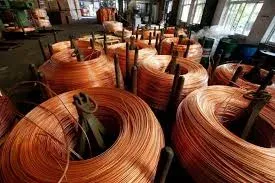
- Copper is stuck near $13,477/ton in a "macro vs
- micro tug-of-war" as inflation-driven U.S
- Treasury yield spikes strengthen the dollar against structural supply shortfalls
As inflation fears ripple through global bond markets, copper, aluminum, and zinc have entered a period of sharp volatility. Supply disruptions and demand weakness are colliding, leaving industrial metals without a clear direction.
On May 21, 2026, copper futures for August delivery on the London Metal Exchange dropped 1.3% before rebounding 0.5% to $13,477 per ton. Aluminum, nickel, tin, and zinc have been similarly oscillating. Amid broader volatility in stocks and bonds, industrial metals are caught between simultaneous supply shocks and demand uncertainty.
Copper: A "Classic Macro vs. Micro Tug-of-War"
Copper — a bellwether for the global economy used in electrical wiring, machinery, and plumbing — has been held up by the same structural bullish narrative that drove it through 2025: energy transition demand and mine supply shortages. But rising U.S. Treasury yields, climbing to multi-decade highs on inflation fears, have strengthened the dollar and triggered periodic profit-taking on long copper positions.
Copper reflects a classic macro vs. micro tug-of-war. In the U.S., rising inflation expectations are pushing Treasury yields higher, supporting a strong dollar. Conversely, Chinese government bond yields are hovering near historic lows, signaling a sluggish domestic manufacturing and property sector.
Charles Cooper, Head of Copper Research at Wood Mackenzie, to CNBC
- Copper price: $13,477/ton (LME August delivery)
- Recent peak: $14,500/ton (near all-time highs)
- Near-term range: $13,200–$13,800/ton
- Upside requires: global bond yield stabilization + Chinese industrial activity recovery
- Grasberg mine (world's 2nd largest, Indonesia): restart delayed to 2028 after 2025 mudslide
- Kamoa-Kakula (DRC) flooding + El Teniente (Chile) accident also reduced supplies
Tariff-driven copper stockpiling has concentrated inventory in U.S. warehouses, limiting availability to the broader market. Data center-related copper demand, while a genuine long-term driver, has yet to fully materialize in physical markets.
Aluminum: Hormuz Blockade Creates Supply Shock
Aluminum faces "structurally tight supply against weak end-demand" in Europe and North America. The critical variable is the Middle East conflict. Around 9% of global aluminum supply originates in the Gulf, and most Gulf producers have been unable to export beyond the region since Iran effectively closed the Strait of Hormuz.
As the conflict persists, supply risks are becoming more entrenched. Even in a scenario where the Strait reopens, the supply shock is not quickly reversible — smelter restart will be gradual, meaning recovery will be phased rather than immediate.
Shashank Sriram, Senior Metals Analyst at Wood Mackenzie, to CNBC
Wood Mackenzie sees "insufficient demand-side momentum to sustain a move towards $4,000 per ton" for aluminum in the near future.
Zinc: Construction Slowdown and European Energy Costs
Zinc is uniquely exposed to an economic downturn: roughly 55% of its end-use demand is in construction. On the supply side, higher diesel, acid, and explosive costs are compressing miner margins. European zinc smelters face energy costs as a key risk — any further Middle East escalation feeding into European energy prices would increase refining costs directly.
Investment Implications: High Volatility, No Clear Direction
Industrial metals currently sit at the intersection of structural bull drivers (energy transition, AI data center build-out, supply chain disruptions) and macro headwinds (rising rates, dollar strength, weak Chinese demand, construction slowdown). Wood Mackenzie believes copper needs both global bond yield stabilization and a clearer Chinese industrial recovery to move materially higher. Investors in copper-linked equities should watch global rate trajectories and Chinese manufacturing PMI alongside mine-specific supply data. Freeport-McMoRan (FCX), operator of the Grasberg mine, is one name where production restart timelines directly affect the copper supply picture.
 FCX
FCXFrequently Asked Questions
Where is copper trading and where could it go next?
Copper is trading around $13,477 per ton on the LME (August delivery, May 21, 2026). The recent peak was $14,500 near all-time highs. Wood Mackenzie sees copper trading in a volatile $13,200–$13,800/ton range until global bond yields stabilize and Chinese industrial activity recovers.
Why is aluminum supply so tight?
About 9% of global aluminum supply comes from the Gulf, and producers there have been unable to export beyond the region since Iran effectively closed the Strait of Hormuz. Smelter restarts are gradual, so even if the Strait reopens, the supply shock will not quickly reverse.
How does inflation affect industrial metal prices?
Inflation fears push up bond yields, which strengthens the dollar and creates headwinds for dollar-denominated commodity prices. At the same time, inflation itself can stimulate raw materials demand. Currently, rising rates (bearish) are in a tug-of-war with energy transition demand (bullish).
What is the impact of the Grasberg mine delay on copper supply?
Grasberg in Indonesia is the world's second-largest copper mine. A 2025 mudslide pushed its restart to 2028. Combined with flood damage at Kamoa-Kakula (DRC) and an accident at El Teniente (Chile), these disruptions create structurally tight copper supply.
Why is zinc especially vulnerable in a recession?
About 55% of zinc end-use demand comes from construction. An economic downturn would directly reduce construction activity and hit zinc demand hard. European zinc smelters also face elevated energy cost risks from the Middle East conflict, adding supply-side pressure.

ExxonMobil Posts 4-Year-High Profit but Misses Estimates as AbbVie, Colgate Among 23 Companies Report Earnings
 XOM
XOM LIN
LIN LYB+25
SEC Receives 24 Earnings Filings, 14 Regional Banks Report en Masse — Newmont, Nasdaq, Snap-on Join In
 ASPS
ASPS PKG
PKG BPRN+20
Over Half of America's Largest Cities See Home Price Declines — Case-Shiller Hits Weakest Since July 2023
 DHI
DHI LEN
LEN EQR+2
EQR+2Wall Street's Defining Moments
See more


Sunday's SEC 8-K Earnings Filings Quiet, but Royal Gold Doubles Net Income and Launches Buyback
 RGLD
RGLDVeritone Earnings Shock Sends Shares Down 23%...York Space Systems Among 25 US Companies Filing SEC 8-K Earnings Reports
 YSS
YSS CODX
CODX IPWR+26
Applied Materials Posts Record Q3 Revenue of $9.1 Billion, All-Time High EPS
 AMAT
AMATSmart Money Briefing
Weekly summaries of Wall Street guru moves and crypto whale activity.