
Iran Denies Attacking Korean Ship; 26 Vessels and 160 Sailors Still Stranded in Hormuz Strait
Iran's parliamentary security chief denied military involvement in a Korean cargo ship fire in the Strait of Hormuz during a video meeting with Korea's foreign affairs committee chair. With 26 vessels and about 160 sailors stranded, the strait remains a near-term variable for global oil and shipping markets.
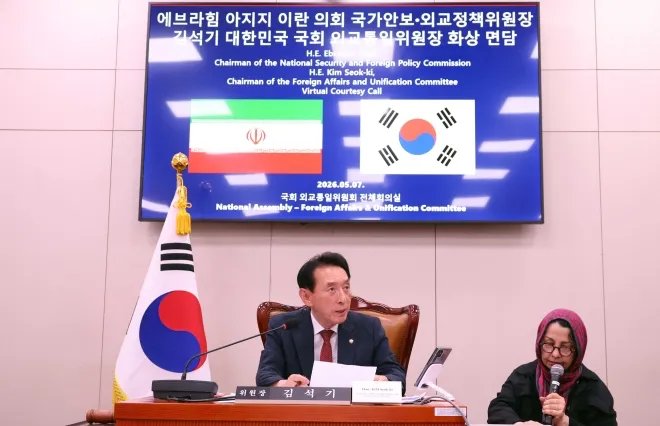
- Iran's parliamentary security chief denied military involvement in a Korean cargo ship fire during a video meeting with Korea's foreign affairs committee chair
- The hardliner IRGC veteran stepping forward signals Tehran's unified message
- With 26 vessels and 160 sailors stranded, the strait remains a near-term variable for oil and shipping markets
Hardline IRGC veteran Azizi stresses "friendly sentiment"; oil and shipping markets remain on edge
Ebrahim Azizi, chair of Iran's parliamentary committee on national security and foreign policy, repeatedly denied any Iranian military involvement in the fire and explosion aboard a Korean vessel in the Strait of Hormuz during a video meeting with Korean lawmaker Kim Seok-ki on May 7.
Iran's military did not attack the ship. If we had truly attacked, the government or the military would have said so openly. Please believe us. Iran and the Iranian people hold very friendly feelings toward Korea.
Ebrahim Azizi, Chair, Iranian Parliamentary Committee on National Security and Foreign Policy
What stands out is who delivered the message. Azizi is a former Islamic Revolutionary Guard Corps (IRGC) commander known for hardline opposition to negotiations with the United States. A hawk—not a moderate—stepped forward to insist Iran did not attack.
Where the situation stands
On May 4, the HMM Namu, a Korean cargo ship anchored in the Strait of Hormuz, caught fire. Suspicions were raised that Iran was behind the incident; Iran's embassy in Seoul issued a statement the previous day denying any responsibility.
Iran's state-run Press TV had earlier published a column suggesting that "targeting a Korean ship that violated maritime regulations is a sovereign right." Azizi drew a clear line, saying, "Iranian media coverage does not represent the Iranian government's official position."
Currently, 26 Korean vessels with about 160 crew members are stranded in the Strait of Hormuz. Roughly 40 Korean nationals also remain inside Iran. Azizi said the stranded vessels would "be resolved amicably."
Why this matters for markets
The Strait of Hormuz handles about 20% of the world's seaborne crude exports and a significant share of LNG. Tensions in the strait, since the start of the Iran war, have directly affected international oil prices and shipping rates. The same geopolitical anxiety underpins why energy-infrastructure plays like TC Energy and Solaris Energy are framed as solutions to AI data-center power bottlenecks.
If the ship dispute is resolved through diplomatic channels, near-term tension can ease. If the facts remain murky, the Strait of Hormuz risk premium will persist.
Frequently Asked Questions
How critical is the Strait of Hormuz to global oil markets?
About 20% of the world's seaborne crude exports—roughly 20 million barrels per day—pass through the Strait of Hormuz. Nearly all of Qatar's LNG exports, plus most crude from Saudi Arabia, the UAE, Iraq, Iran, and Kuwait, transit through this strait. Any disruption sends global oil prices higher almost immediately.
Why does it matter that an Iranian hardliner personally issued the denial?
Azizi is an IRGC veteran who has long opposed negotiations with the U.S. and the West. When a hardliner—not a moderate or the foreign ministry—personally states "we did not attack," it signals that the official Iranian government message is unified across factions. It indicates Tehran does not want friction with Korea to escalate.
How does Strait of Hormuz tension affect Korean investor portfolios?
Direct impact is felt in Korean refiners (SK Innovation, GS, S-Oil) and shippers (HMM, Pan Ocean), which see elevated volatility. On the U.S. side, oil tanker and dry-bulk shipping ETFs (FRO, STNG, BDRY) tend to benefit short-term, while crude-oil ETFs (USO, XLE) become more volatile. Phased entry and diversification are preferable to lump-sum buys.
How might the HMM Namu situation be resolved diplomatically?
Azizi's pledge that the issue will "be resolved amicably" suggests channels are open. Historically, similar incidents resolve via diplomatic negotiation within 1–2 weeks for vessel release, while fact-finding takes longer. Markets are leaning toward a near-term de-escalation scenario.



Wall Street's Defining Moments
See more


Sunday's SEC 8-K Earnings Filings Quiet, but Royal Gold Doubles Net Income and Launches Buyback
 RGLD
RGLDVeritone Earnings Shock Sends Shares Down 23%...York Space Systems Among 25 US Companies Filing SEC 8-K Earnings Reports
 YSS
YSS CODX
CODX IPWR+26
Applied Materials Posts Record Q3 Revenue of $9.1 Billion, All-Time High EPS
 AMAT
AMATSmart Money Briefing
Weekly summaries of Wall Street guru moves and crypto whale activity.